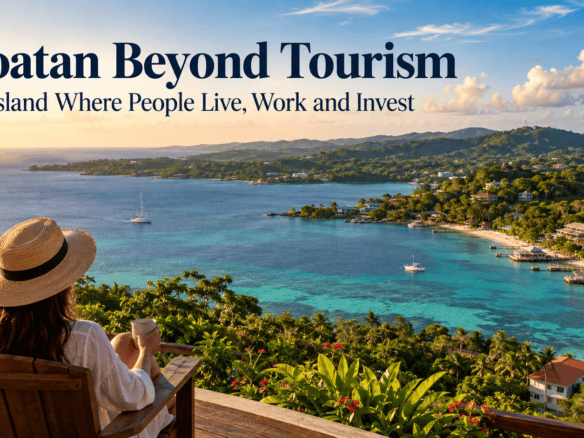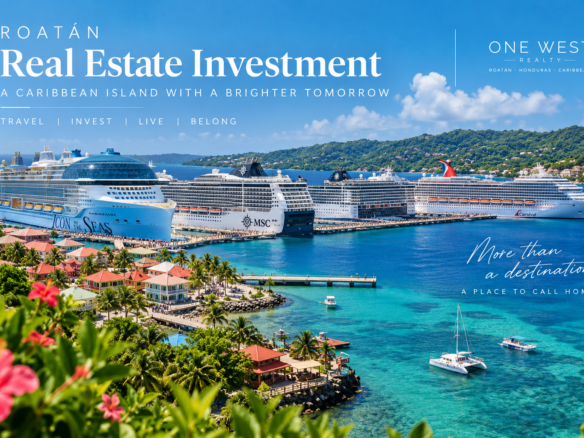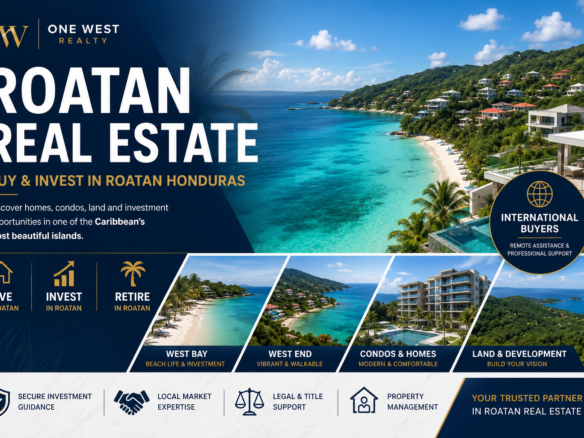




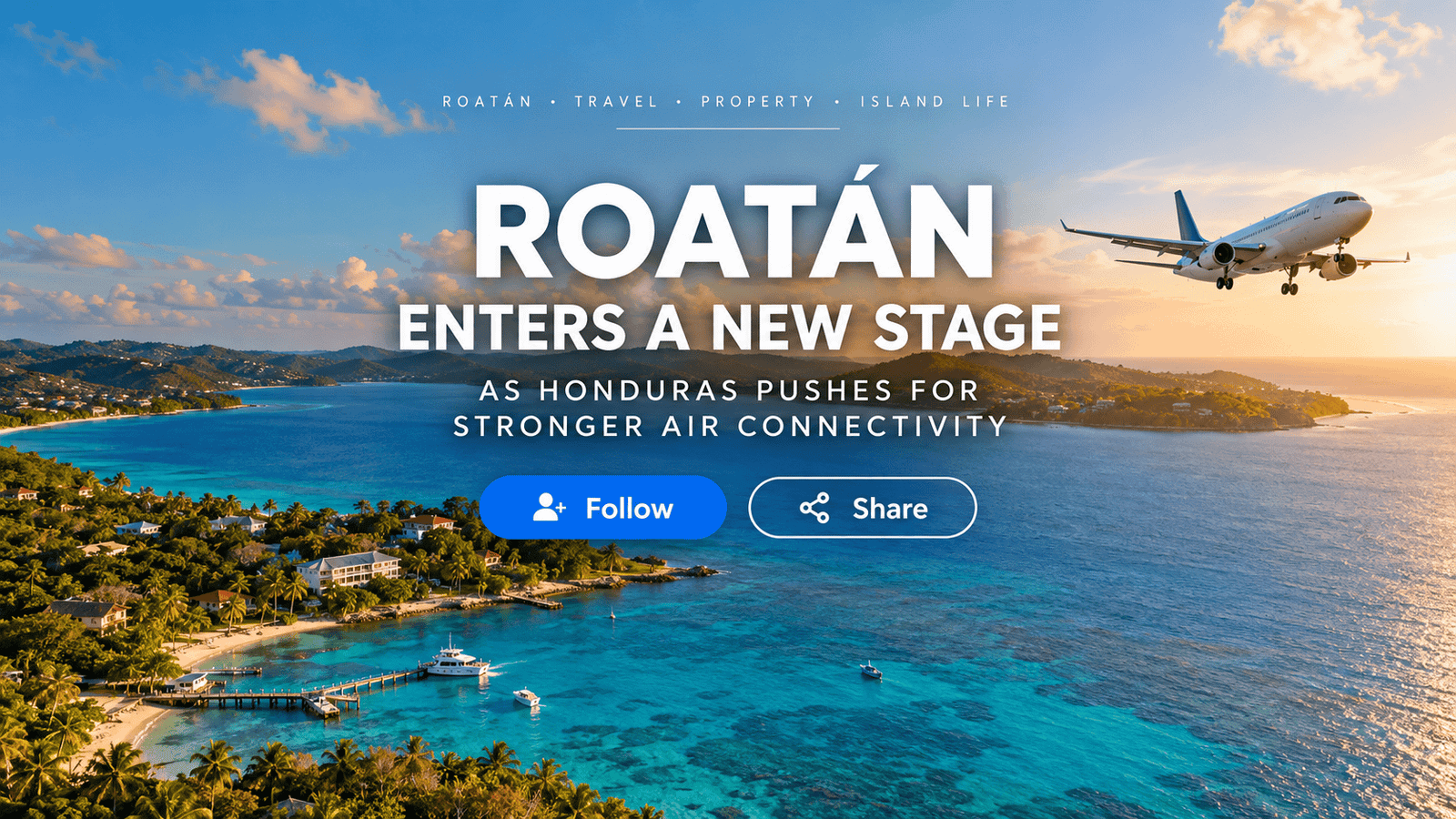
Better connections, changing travel patterns and continued attention on the Bay Islands are placing Roatán in an increasingly interesting position for travelers, residents and people considering a longer-term relationship with the island.
Roatán has spent years building a reputation around its Caribbean setting, beaches, reef system and international appeal. But the conversation surrounding the island is increasingly expanding beyond tourism alone.
During 2026, Honduras has moved forward with initiatives aimed at strengthening air connectivity, improving coordination around airport operations and modernizing different areas of the country’s aviation system.
For an island such as Roatán, where air access plays a significant role in how residents, visitors and property owners move between the island and the mainland, that broader push toward connectivity deserves attention.
Why connectivity matters differently on an island
In mainland destinations, improved transportation can simply shorten a trip. On an island, connectivity can affect much more of the everyday experience.
It influences how easily travelers arrive, how owners coordinate visits, how residents connect with the rest of Honduras and how international buyers evaluate the practical side of spending more time in the Caribbean.
That helps explain why searches for properties for sale in Roatan Honduras often involve more than simply comparing a house and its price.
Location, road access, distance from services, proximity to the airport, lifestyle, property maintenance and future plans can all become part of the decision.
Roatán is not one single property market
One of the easiest mistakes for someone discovering the island online is assuming that every part of Roatán offers roughly the same experience.
It does not.
The western side of the island is widely associated with established tourism activity, beaches and internationally recognized destinations. Other areas offer quieter residential environments, coastal communities, commercial activity or land that may appeal to buyers thinking about longer-term plans.
That difference matters because someone searching for a seasonal residence may prioritize completely different features from a buyer looking for land, a permanent home or a property that can be managed while living abroad.
Some buyers are looking beyond the most familiar names
Communities such as Flowers Bay offer a different perspective on island living, combining residential areas with relatively convenient access to other parts of Roatán.
On another part of the island, Palmetto Bay represents a more private coastal setting where the conversation can shift toward homes, land and longer-term ownership.
And for people whose priorities include transportation, everyday services or commercial activity, Coxen Hole plays a very different role from the island’s beach-oriented communities.
This is why browsing Roatán through individual communities can be more useful than treating the entire island as a single search result.
From visiting Roatán to imagining life here
A short trip and property ownership are two completely different experiences.
Visitors can fall in love with a view in a matter of minutes. Ownership requires more questions.
How often will the property be used? Who will look after it when the owner is away? Is the goal to live on the island full time, return seasonally or hold the property for a longer period?
This is particularly relevant for buyers researching Roatán from the United States or Canada. Improved connections can make ownership feel closer, but the property itself still needs local oversight when its owner is hundreds or thousands of miles away.
That is where property management in Roatán becomes part of the ownership conversation rather than something to consider only after a purchase has been completed.
Land is creating a different kind of conversation
Not everyone searching Roatán is looking for a finished home.
Residential land can appeal to people who want more control over how a future property is designed, particularly when the objective is a permanent residence, seasonal home or longer-term development.
But buying land requires a different evaluation. Access, utilities, topography, documentation and the viability of the future project deserve attention before construction begins.
Buyers considering that route may also need to examine construction planning and development alongside the original property search, as well as available financing options when applicable.
International interest changes how people research the island
Today’s property search often starts long before someone boards a flight.
A buyer can compare communities, understand the geography of Roatán, review available homes and land, evaluate financing and begin learning about ownership from another country.
This digital-first behavior is particularly common among younger buyers who expect to research almost every step online before deciding whether a destination deserves an in-person visit.
For people moving between Honduras and the United States, especially those already familiar with property markets in Florida , Roatán can represent a very different type of ownership decision: smaller island communities, Caribbean geography and a lifestyle-driven market rather than a large metropolitan one.
Buyers evaluating several parts of the country can also compare Roatán with real estate in Tegucigalpa or explore property opportunities across Honduras depending on whether their priority is island living, an urban residence, land or a broader investment strategy.
What should people watch next in Roatán?
Air connectivity is only one part of the picture.
Infrastructure, transportation, services, community development and how different parts of the island evolve will continue shaping the Roatán experience for both visitors and residents.
The important point is not to interpret every new flight, infrastructure announcement or tourism development as an automatic signal that property values will rise.
Real estate remains local. Two properties on the same island can perform very differently depending on location, physical condition, access, documentation, surrounding development and the objectives of the buyer.
What stronger connectivity does accomplish is something simpler: it keeps Roatán connected to a much larger conversation.
And for people who once saw the island only as a place to visit, that conversation is increasingly including another question: what would it be like to own something here?