



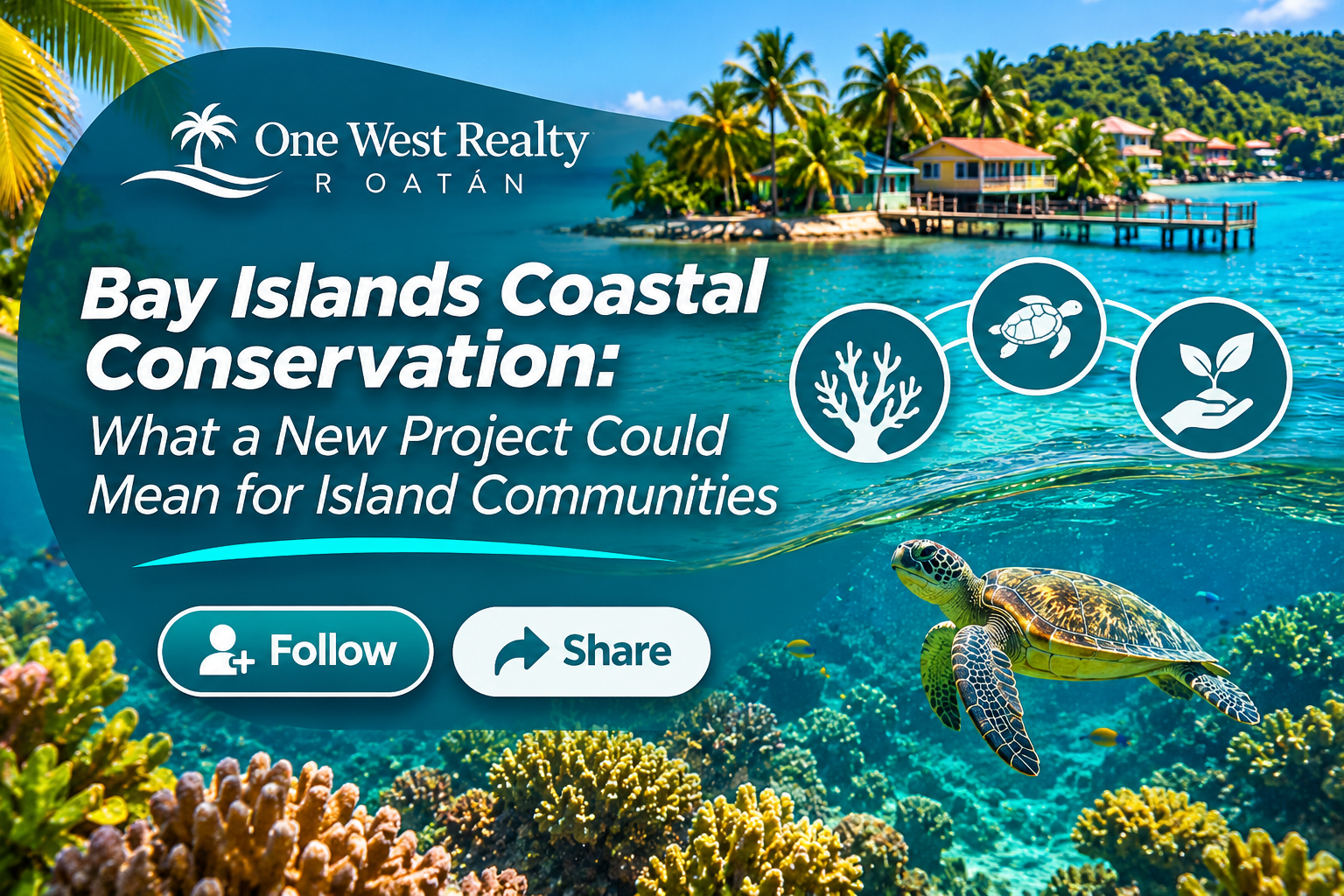
A new coastal conservation project outlines 24 months of work in Roatán, José Santos Guardiola, Utila and Guanaja. Its potential reaches beyond ecosystem restoration to local fisheries, community participation and the natural foundations of island life.
In the Bay Islands, caring for the natural environment also means caring for part of what makes it possible to work, welcome visitors and sustain community life. That is why a new coastal conservation initiative deserves attention beyond its launch.
Costas Resilientes includes actions to support mangrove and coral reef restoration and protection, strengthen community governance and promote sustainable livelihoods.
The initiative was presented by WWF Mesoamerica and is jointly funded by that organization and the Spanish Agency for International Development Cooperation, AECID. The announcement was reported by Karen Mendoza in Diario Roatán on November 16, 2026.
The project will run for 24 months, with a total budget of €499,995 shared across the participating territories, which also include Trujillo, Honduras, and Placencia, Belize.
Bay Islands Coastal Conservation: Why It Matters
Mangroves and coral reefs belong to a connected coastal environment. They provide habitat for marine species, support fishing activities and contribute to coastal protection. Reefs also sustain recreational and tourism experiences associated with the sea.
The project’s significance lies in addressing the relationship between nature and human activity. Its approach combines environmental work with community participation and livelihoods, placing local needs within the conservation agenda.
For Roatán and the other participating islands, the potential benefit is stronger support for the natural systems on which many coastal activities depend.
Achieving that benefit will depend on site selection, technical implementation and the ability to maintain the work after the first interventions.
Mangrove and Coral Reef Restoration: Looking Beyond the First Intervention
A restoration activity can mark the beginning of a process. Its outcome becomes clearer through monitoring over time.
The relevant questions are how the ecosystems respond and whether conditions at each site allow progress to continue. For coral reefs, pollution, changing water temperatures and physical damage can affect recovery.
Progress therefore needs to be considered over different timescales. Activities and early changes can be documented during implementation, while broader ecological recovery may require observation beyond the project’s closing date.
The strongest opportunity is to establish a continuing process: identify priorities, act where appropriate and collect information that helps communities understand what works.
Local Fisheries: Connecting Conservation With Community Livelihoods
In the Bay Islands, the initiative includes support for fisheries management and fishing activities serving local markets.
This component matters because it connects environmental protection with a specific economic activity. Mangroves provide habitat during different life stages for various fish species, including some important to fisheries.
The intended direction is a more sustainable relationship between resource use and conservation. To assess progress, it will be important to understand which measures are agreed upon, how fishers participate and how implementation is followed.
The announcement alone does not establish future increases in catches or income. It identifies a line of work whose value should be assessed both in the environment and in the experience of participating communities.
Community Participation: Building the Conditions for Continuity
Community governance is one of the announced components. Its practical importance lies in how decisions are made and how agreements are maintained.
Across a municipality with different coastal communities, such as José Santos Guardiola, local needs and conditions can vary. Listening to people who use and understand those resources can help define priorities suited to each setting.
A useful measure of this work will be whether participation leads to clear responsibilities, workable agreements and local capacity to continue activities.
The planned exchange between communities in Honduras and Belize can also provide lessons. Its usefulness will depend on adapting experiences to each territory rather than assuming the same solution will work along every coastline.
Sustainable Tourism in the Bay Islands: Protecting Its Natural Foundations
Conservation is directly connected to attractions that motivate many island visits: coastal landscapes, diving and marine life.
Protecting these ecosystems can help sustain the environmental quality of the visitor experience. This is a contribution to the destination’s natural foundations, rather than a forecast of higher visitor numbers or tourism revenue.
The wider conversation also includes residents, businesses and property owners. Caring for the surroundings is a shared responsibility that needs to accompany everyday activity.
What Results Should Be Followed Over the Next 24 Months?
The available announcement does not provide a complete set of quantified targets. The following are useful areas to watch when assessing progress; they are analytical suggestions rather than stated official project indicators.
| Area | What to watch |
|---|---|
| Restoration | Sites receiving interventions, follow-up monitoring and changes in the ecosystems being supported. |
| Participation | Communities involved, agreements reached and clearly assigned responsibilities. |
| Local fisheries | Measures put into practice and participation by fishing stakeholders. |
| Continuity | Capacity, resources and responsibilities for maintaining work after the project ends. |
This perspective helps distinguish between completing activities and achieving changes that last.
An Opportunity to Build Lasting Coastal Conservation
Costas Resilientes brings conservation, communities and economic activities into one proposal. That connection is its central contribution to the island outlook.
The two-year implementation period can provide time to carry out actions, establish agreements and generate useful information. The longer-term impact will depend on what participating communities and stakeholders can sustain afterward.
At One West Realty, we follow these initiatives because understanding the islands also means understanding their environment, livelihoods and the decisions that influence their future.
Terralosi: Technology for Land Development Administration
For the real estate sector, Terralosi offers cloud software for managing land subdivisions, lot inventory, sales, customer relationships, contracts, financing and payment collection, with interactive site plans and management reports.
One West Realty Roatán